
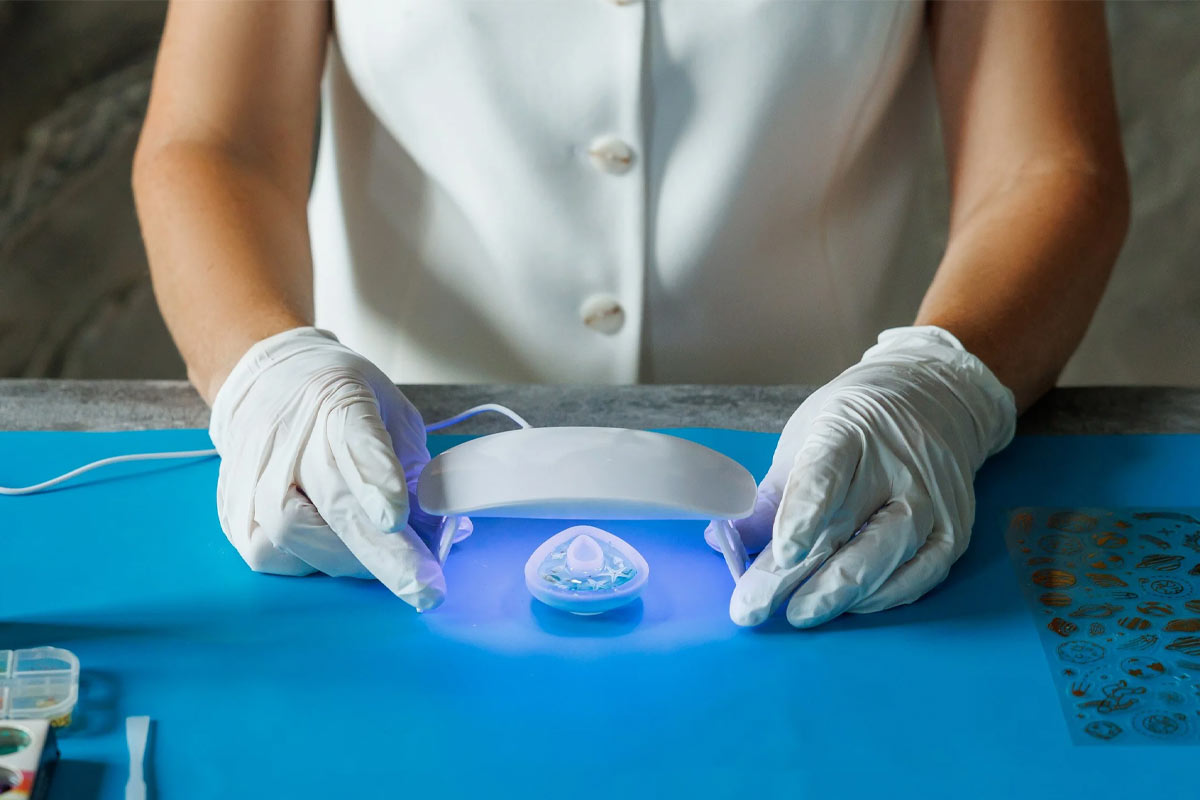
Although epoxy resin and UV resin look very similar once cured, they are two different materials designed for different applications.
The main difference lies in how they cure. Epoxy resin consists of two components—the resin and the hardener—which must be mixed in the correct ratio before use. UV resin, on the other hand, is a single-component, ready-to-use resin that cures only when exposed to ultraviolet (UV) light, typically from a UV or UV LED lamp.
When Should You Choose Epoxy Resin?
Epoxy resin is the best choice for larger projects and applications that require thicker pours. Its longer working time allows you to mix pigments, position decorative elements and make adjustments before the curing process begins.
It is commonly used for:
- Resin art and artwork with a glass-like finish
- Woodworking and river tables
- Silicone mould casting
- Decorative objects
- Coasters, trays and tabletops
- Larger jewellery pieces
When Should You Choose UV Resin?
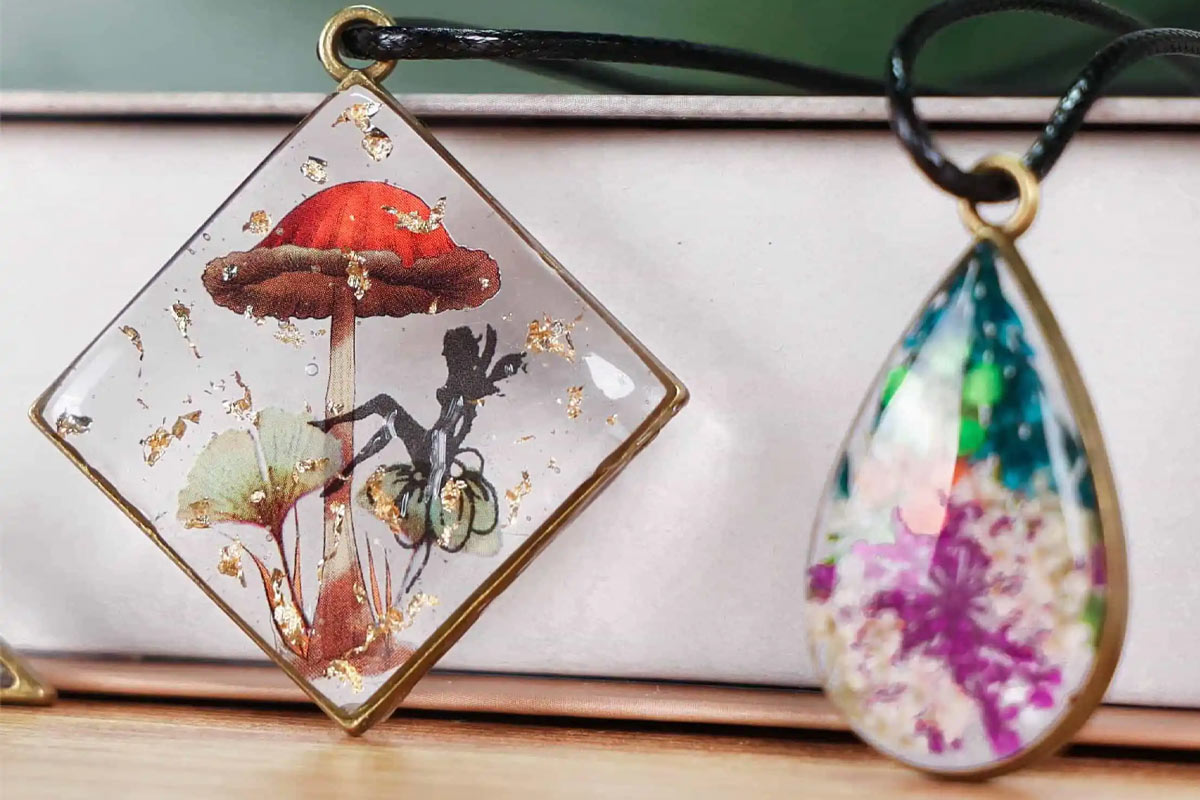
UV resin is ideal for small projects where fast curing is essential. Since it requires no mixing, it is extremely easy to use and can harden within just a few minutes, significantly reducing production time.
It is commonly used for:
- Small jewellery pieces
- Small silicone moulds
- Miniatures
- Quick repairs
- Fine details and protective coatings
Epoxy Resin vs UV Resin
| Epoxy Resin | UV Resin |
|---|---|
| Two-part system (resin and hardener) | Single-component, ready to use |
| Longer working time | Cures within minutes |
| Suitable for large castings | Ideal for small projects |
| Excellent strength and durability | Extremely fast curing |
| More economical per gram | More expensive per gram |
| Requires accurate mixing | No mixing required |
| Takes hours or days to fully cure | Requires a UV or UV LED lamp |
Does UV Resin Have Any Limitations?
Yes. Because UV resin cures only when exposed to ultraviolet light, it is not suitable for large or thick castings. If the layer is too thick or contains heavily opaque pigments, the UV light cannot penetrate all the way through, preventing the inner resin from curing properly.
Epoxy resin, by contrast, cures through a chemical reaction that occurs throughout the entire mixture, making it a much better choice for larger projects and thicker pours.
Conclusion
There is no single “best” resin—only the most suitable resin for your project.
If you’re creating artwork, larger decorative pieces, mould castings or woodworking projects, epoxy resin is generally the best option.
If you’re making small jewellery, miniatures or projects that require an almost immediate cure, UV resin is an excellent choice, despite its higher cost per gram.
Many artists and makers use both materials: epoxy resin for their main projects and UV resin for fine details, quick repairs and applications where fast curing is a major advantage. Using each resin for its intended purpose allows you to achieve the best possible results.